

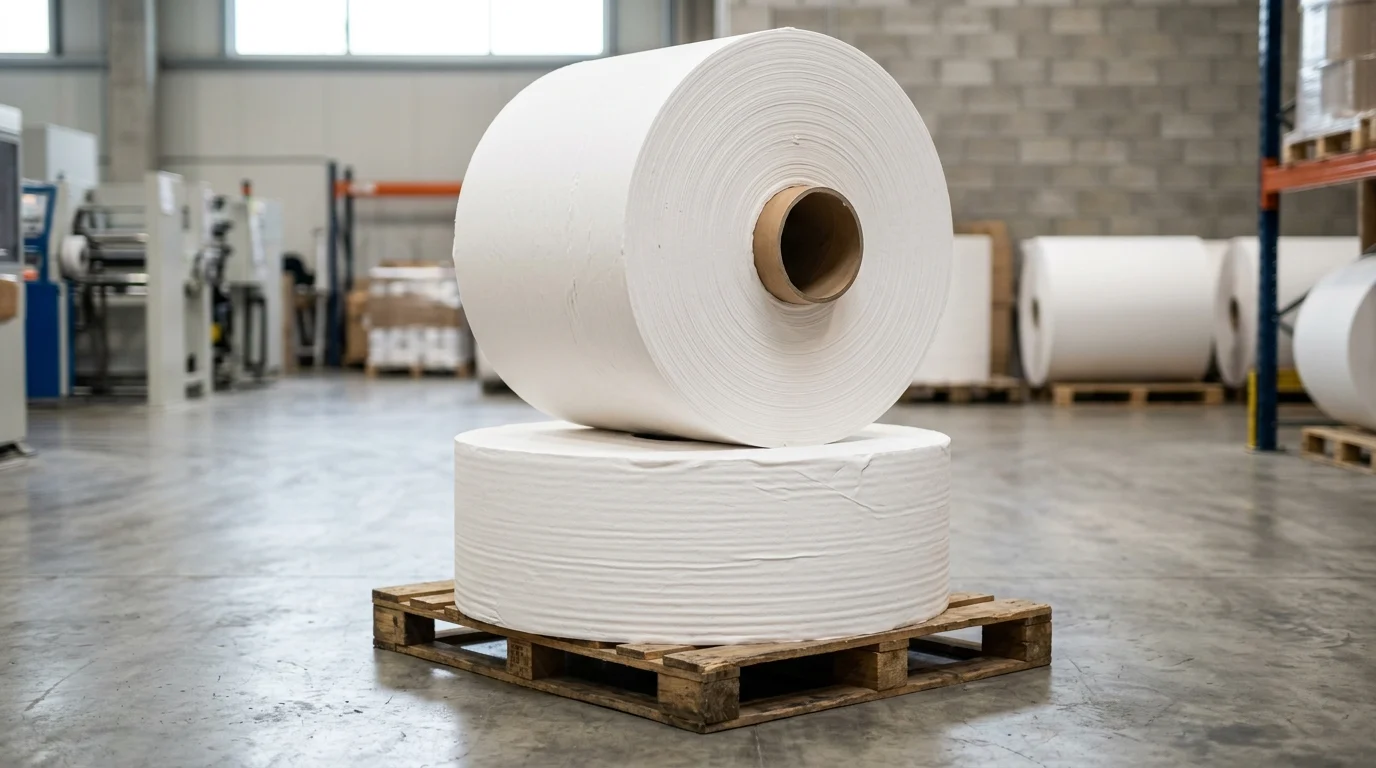
For tissue converters, raw paper sourcing is not just a purchasing decision—it directly shapes machine uptime, finished-roll quality, and margin control. Toilet tissue parent rolls must meet precise requirements for basis weight, moisture, tensile strength, roll geometry, and furnish type before bulk pricing becomes meaningful. A lower per-ton price can quickly disappear if poor winding, weak tensile performance, or unstable moisture levels cause web breaks and scrap. This article examines how buyers can secure volume discounts while protecting runnability, storage stability, and end-product performance. It also highlights the technical benchmarks and procurement checks that help converters balance cost efficiency with consistent household tissue production.
Defining Toilet Tissue Parent Roll Requirements
Large-scale converting facilities procure high-quality toilet tissue parent rolls in bulk to operate efficiently. Converters rely on these jumbo reels to maintain continuous production while controlling raw material costs. Strategic sourcing requires securing volume discounts without compromising the paper’s physical properties or geometry. Standard parent rolls need stable performance, consistent formation, and uniform thickness to integrate seamlessly into automated lines. Establishing a cost-effective supply chain begins with defining precise technical thresholds, including mandatory dimensions like roll width, outer diameter, and core size. While virgin pulp dominates premium tiers, incorporating impartial guidance on recycled, mixed-furnish, and alternative-grade parent rolls allows facilities to address eco-conscious markets and optimize costs. Because base paper quality directly impacts machine runnability and product yield, specifications typically target a basis weight between 13 and 18 grams per square meter (gsm) per ply, depending on the chosen furnish and market tier.
Key Technical Attributes to Specify
The technical specification sheet acts as the primary contract between the mill and the converter. Strict tolerances for Machine Direction (MD) and Cross Direction (CD) tensile strength—evaluated via standard TAPPI methods—are essential to prevent web breaks during high-tension unwinding. Elongation (stretch) is equally critical, directly influencing embossing and perforation. Optical properties also require standardization; virgin wood pulp rolls target specific ISO brightness levels, whereas mixed-furnish or recycled grades have different baseline expectations. Moisture content requires tight control, ideally maintained between 5.0% and 7.0%. To prevent moisture degradation and tissue aging or hardening during long-term storage, facilities implement proper warehousing protocols, including humidity-controlled environments and First-In-First-Out (FIFO) rotation. Additionally, securing comprehensive cargo insurance is vital to cover potential humidity damage across lengthy Full Container Load (FCL) ocean transits.
| Technical Attribute | Standard Range / Threshold | Impact on Converting |
|---|---|---|
| Basis Weight | 13 – 18 gsm/ply | Dictates final product weight and plushness |
| Roll Geometry | Width, OD, Core Size | Mandatory for unwinder compatibility |
| Moisture Content | 5.0% – 7.0% | Prevents brittleness; ensures ply adhesion |
| ISO Brightness | Varies by grade (per ISO methods) | Determines optical purity and consumer appeal |
| MD Tensile Strength | Evaluated per TAPPI standards | Prevents web breaks at high machine speeds |
Fit for Household Tissue Converting
Beyond raw specifications, the base material must perform exceptionally well during household tissue converting. High-speed lines—which can operate at speeds exceeding 500 meters per minute, though this varies significantly by equipment vintage and regional capabilities—require parent rolls with flawless edge profiles and uniform winding tension. A well-engineered roll minimizes machine downtime and reduces scrap during complex multi-ply lamination and deep-embossing stages. The balanced combination of softness, absorbency, and structural integrity ensures the final paper remains gentle on the skin.
Strategic inventory management forms the second pillar of converting efficiency. Facilities that also process jumbo parent rolls for facial applications often cross-leverage technical standards to harmonize raw material stocks across diverse product lines. This cross-category strategy simplifies procurement, reduces warehouse complexity, and allows converters to pool volumes for better bulk pricing across both toilet and facial tissue grades.
Evaluating Costs and Supplier Comparisons

Achieving a low unit cost through bulk purchasing requires moving beyond generic Total Cost of Ownership (TCO) principles to implement concrete bulk-discount mechanics. Effective contracts utilize volume-tier pricing tables, where the per-ton rate decreases at specific quarterly tonnage thresholds, alongside multi-year contract rebates. Crucially, contracts must include index-linked escalation formulas tied to pulp commodity indices (such as NBSK and BHKP) and robust force-majeure clauses to manage market volatility.
In typical international export contracts, suppliers often quote a Minimum Order Quantity (MOQ) benchmark of 15 to 20 metric tons. This figure is frequently cited as the volume required to “cube out” a standard 40-foot high-cube (40HQ) shipping container. However, because tissue rolls vary widely in density, furnish, and packing efficiency, this 15–20 MT range should be treated as a negotiable benchmark rather than a fixed shipping-volume law. Optimizing freight efficiency requires calculating the exact loading plan based on specific roll diameters and weights.
What to Include in a Supplier Comparison
A rigorous supplier comparison extends beyond the baseline cost per metric ton. Evaluators assess the ratio of hardwood to softwood pulp in the furnish, as this dictates prevailing market index pricing and final tactile properties. Freight terms, currency exchange risks, and extended payment terms significantly alter cash flow dynamics. Comparing suppliers based on their capacity to provide specialized variants, such as specialized kitchen towel parent rolls, reveals their overall manufacturing flexibility. To truly unlock cost-effective sourcing, negotiations focus on securing favorable rebate thresholds and index-linked escalation caps that protect against sudden commodity price spikes, ensuring that bulk discounts translate into actual bottom-line savings.
How to Balance Price, Quality, and Risk
Capitalizing on the lowest quoted price introduces severe operational risks if quality control is compromised. Substandard parent rolls frequently suffer from inconsistent basis weights or poor winding, leading to machine downtime that erodes initial cost savings. While some industry benchmarks suggest a maximum waste allowance of 3% to 5% during converting, this is not a universal standard; acceptable scrap ceilings vary heavily by region, equipment vintage, furnish type, and product grade. Parent rolls that drive scrap rates above a facility’s specific thresholds are ultimately unprofitable, regardless of acquisition cost. Balancing aggressive price negotiations with strict contractual guarantees regarding defect rates is essential. This involves tying waste discussions directly to bulk procurement by establishing protocols for managing rejected parent rolls or claim adjustments within large Full Container Load (FCL) shipments. Such clauses ensure converters receive credits for defective lots without the prohibitive cost of returning full containers.
Building a Reliable Sourcing Process
Transitioning from initial supplier discovery to consistent, high-volume procurement demands a systematized sourcing process. For tissue converters and private label owners, supply chain reliability is just as vital as material quality. A resilient procurement pipeline keeps production schedules uninterrupted and safeguards market share.
Key Takeaways
- Define roll width, outer diameter, core size, basis weight, and furnish requirements before requesting bulk pricing from suppliers.
- Target a basis weight of 13 to 18 gsm per ply for most toilet tissue parent roll applications, depending on product grade.
- Specify moisture content between 5.0% and 7.0% to protect softness, converting stability, and long-term storage performance.
- Use TAPPI-based tensile strength and elongation requirements to reduce web breaks on high-speed converting lines.
- Evaluate bulk discounts alongside quality consistency, cargo insurance, and warehousing controls rather than choosing only the lowest unit price.
- Match virgin, recycled, or mixed-furnish parent rolls to the final product’s market tier, brightness expectations, and sustainability goals.
Frequently Asked Questions
What specifications should buyers confirm before ordering toilet tissue parent rolls?
Confirm basis weight, roll width, outer diameter, core size, moisture content, brightness, tensile strength, and furnish type. These details help ensure compatibility with converting equipment and reduce downtime.
What is the typical basis weight for toilet tissue parent rolls?
Most toilet tissue parent rolls target about 13 to 18 gsm per ply, depending on softness, strength, furnish type, and the intended market tier.
Why does moisture content matter in bulk parent roll sourcing?
Moisture content, ideally around 5.0% to 7.0%, affects softness, ply adhesion, brittleness, and storage stability. Poor moisture control can cause defects during converting or long-term warehousing.
How do bulk discounts help tissue converters control costs?
Bulk purchasing can lower unit costs, improve supply continuity, and support high-speed production planning. Buyers should still verify quality tolerances before accepting price-based offers.
Are virgin wood pulp parent rolls better than recycled grades?
Virgin wood pulp rolls often deliver higher brightness, softness, and consistency, while recycled or mixed-furnish grades may support cost and sustainability targets. The best choice depends on product positioning.
Post time: Aug-12-2026


