

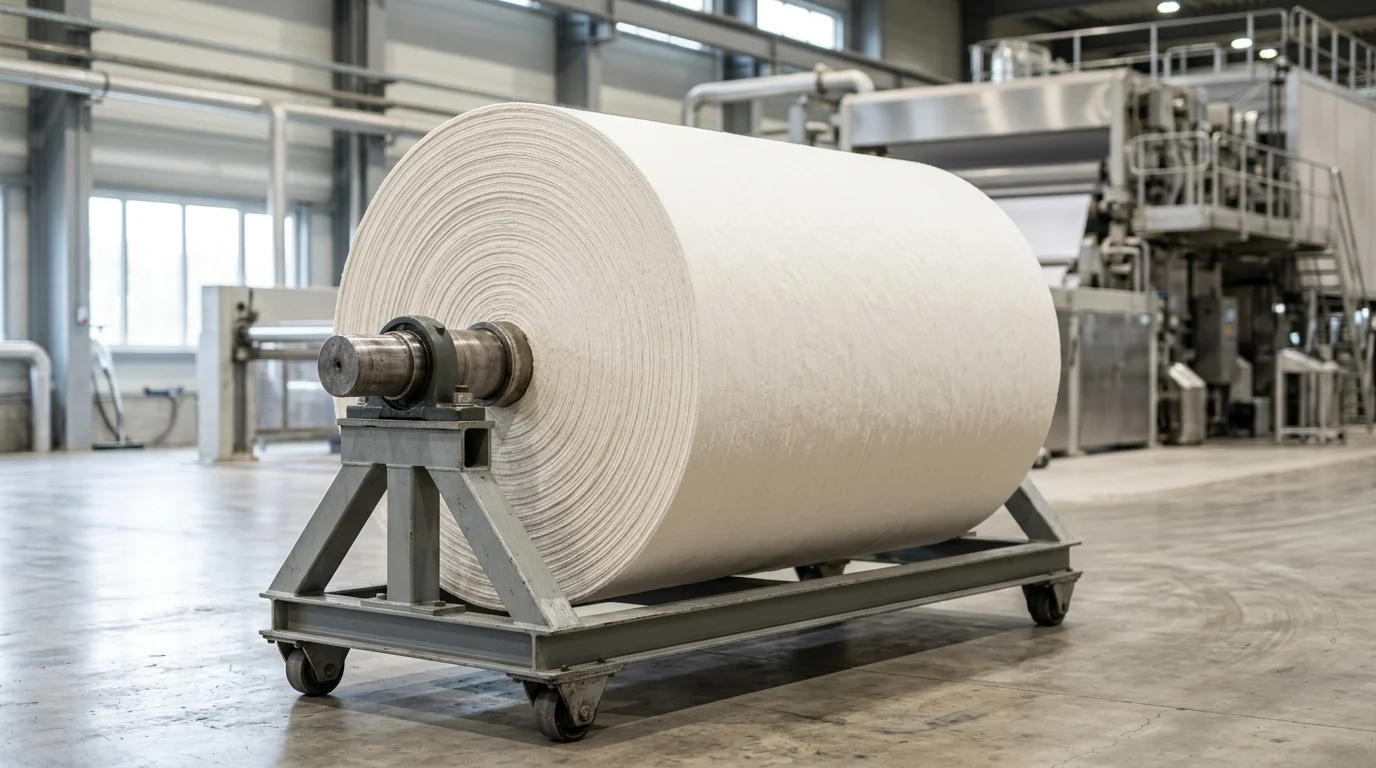
Private label household paper success depends on decisions made far upstream of the retail shelf. For brands competing on softness, absorbency, and consistency, virgin wood pulp parent rolls provide the base sheet that determines how facial tissue, napkins, toilet paper, or kitchen towels will feel and perform after converting. The right specification is not just about fiber quality; it also involves GSM, ply structure, roll dimensions, core size, tensile strength, moisture control, and packaging. This article explains the practical customization choices buyers should evaluate so their parent rolls match both product positioning and converting equipment requirements.
Customization options for virgin wood pulp parent rolls
Creating a successful private label tissue brand starts long before the product reaches supermarket shelves. Achieving a premium feel depends heavily on the base material, and for brands targeting the mid-to-high-end market, a virgin wood pulp parent roll serves as a foundational starting point.
These massive rolls of paper act as an adaptable blank canvas for converters and manufacturers. By specifying the base-sheet properties—such as fiber composition, basis weight, and bulk—private label owners can engineer specific end-use characteristics, such as the plush hand-feel of a premium facial tissue or the rapid liquid absorption of a kitchen towel. Beyond fiber composition, buyers must explicitly define physical format parameters to match their converting equipment. Roll width and outer diameter (OD) dictate how the roll fits onto the unwinding stand, while the core diameter must match the machine’s chucks to prevent slippage. Sheet length (linear meters per roll) impacts changeover frequency, and specifying moisture-proof packaging—such as multi-layer stretch film—protects the hygroscopic paper from humidity damage during transit and storage.
Basis weight, ply structure, and softness
One of the most critical upstream customization choices involves the basis weight, measured in grams per square meter (GSM). As a representative example, manufacturers usually specify a lighter basis weight ranging from 12 to 15 GSM per ply for facial tissues to ensure a gentle touch. Conversely, heavy-duty kitchen towels typically require 20 to 25 GSM per ply to handle wet usage without disintegrating.
Beyond the raw weight, the ply structure alters the product’s profile. A standard 2-ply design often suits everyday value brands, while upgrading to a 3-ply or 4-ply structure adds bulk and softness. When paired with high-quality virgin fibers, these multi-ply setups deliver enhanced comfort while maintaining the baseline tensile strength required for downstream manufacturing.
Embossing, printing, and lamination choices
Visual appeal and structural integrity often come down to embossing, printing, and lamination. These are downstream converting processes rather than intrinsic parent-roll customizations, but they dictate strict physical requirements for the base sheet. Embossing functionally creates micro-pockets of air between the plies, which can boost liquid absorbency depending on the pattern. To support this without tearing, buyers must source a base sheet—such as this illustrative virgin wood pulp parent roll—engineered with high dry tensile strength and uniform stretch capacity.
Printing requires a base paper with high surface smoothness and minimal linting to ensure crisp ink transfer and prevent clogged print heads. Lamination, which uses water-soluble adhesives to bind plies, demands a consistent caliper (thickness) and uniform moisture profile across the web. This minimizes the ply separation that can occur when pulling a tissue from a dispenser, allowing private label owners to create recognizable, durable products.
Virgin wood pulp parent rolls compared with alternatives
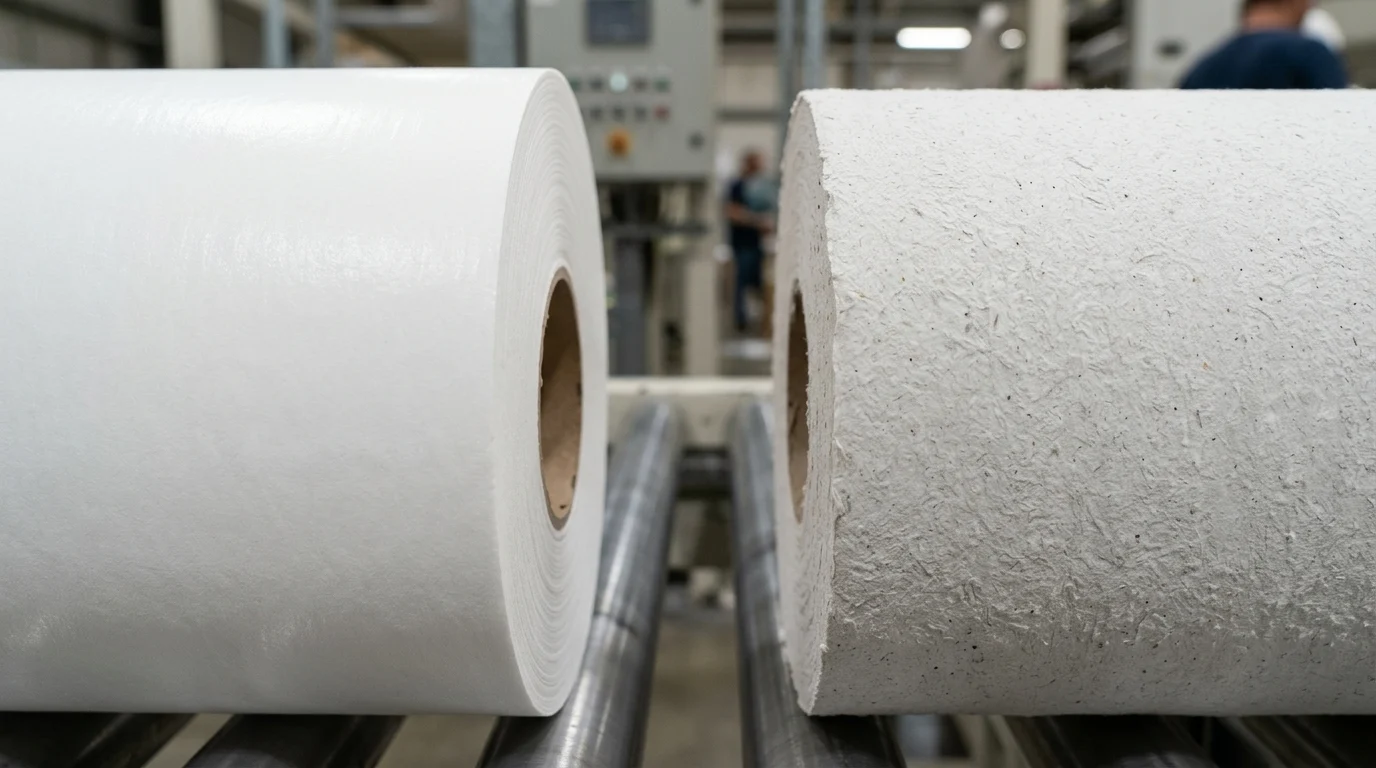
When sourcing base paper, buyers generally choose between 100% virgin wood pulp, recycled pulp, or a mixed blend. While recycled materials appeal to eco-conscious demographics, virgin wood pulp remains the standard choice for premium product lines. Buyers must also distinguish between integrated mills—which process their own wood on-site for maximum consistency—and those relying on market pulp or mixed blends, as these supply chain differences directly impact cost, batch-to-batch uniformity, and environmental claims.
When selecting base materials and customization levers, buyers must navigate several key trade-offs:
- Softness vs. Strength: Highly refined virgin fibers maximize softness but can reduce tensile strength, requiring a careful balance for heavy-duty products.
- Sustainability vs. Performance: While recycled pulp offers a strong environmental positioning, virgin pulp delivers superior brightness, softness, and high-speed runnability.
- Cost vs. Consistency: Integrated mills offer higher batch-to-batch consistency but may carry higher minimum order quantities (MOQs) and costs compared to market pulp blends.
To bridge the sustainability gap, many buyers opt for virgin pulp certified by organizations like the FSC or PEFC. A substantive sustainability strategy also considers the mill’s carbon footprint, water usage, and the availability of totally chlorine-free (TCF) or elemental chlorine-free (ECF) bleaching alternatives.
Purity, comfort, and performance differences
The primary differences between virgin and recycled pulp lie in purity, brightness, and texture. Recycled paper goes through extensive repulping and de-inking processes, which naturally shortens the paper fibers. Shorter fibers generally result in a rougher texture and lower tensile strength. Virgin wood pulp, by contrast, utilizes longer, intact fibers that weave together to create a smoother feel.
Performance metrics also highlight the differences in these materials. A high-quality virgin roll typically achieves high ISO brightness levels, offering a clean, white appearance. Furthermore, the superior dry tensile strength of virgin rolls allows them to withstand the rigorous demands of high-speed converting lines with fewer web breaks.
Applications for facial tissue, toilet tissue, napkins, and kitchen towels
Because virgin wood pulp offers a versatile balance of softness and strength, it adapts to a wide variety of household paper products. To understand how the same base material serves different end uses, converters look closely at the target metrics for each application. The basis weights and properties below serve as representative examples rather than fixed targets, as regional standards and retail channel requirements vary significantly.
| Application | Target Basis Weight (GSM) | Key Paper Properties | Performance Focus |
|---|---|---|---|
| Facial Tissue | 13 – 15 (2-3 ply) | High bulk, high softness, moderate dry tensile | Maximum comfort and skin safety |
| Toilet Tissue | 15 – 18 (2-4 ply) | High stretch, rapid water absorbency | Quick dispersibility in plumbing |
| Napkins | 16 – 20 (1-2 ply) | Moderate bulk, balanced dry tensile | Absorbency and crisp printability |
| Kitchen Towels | 20 – 25 (2 ply) | High wet tensile, maximum absorbency | Heavy-duty cleaning without tearing |
As an illustrative example, when producing bathroom products, sourcing a high-quality toilet tissue parent roll ensures the final product is strong enough for use but breaks down quickly in plumbing systems.
Sourcing, testing, and approval process
Finding the right supplier for a virgin wood pulp parent roll requires a structured approach. Private label owners and tissue converters cannot just rely on a specification sheet; they need a rigorous vetting process to guarantee the paper performs well on high-speed converting lines and meets consumer expectations.
Sample review and lab testing steps
Once a supplier provides a sample virgin wood pulp parent roll, converters should run it through a standardized lab testing sequence. Relying on established testing frameworks, such as the ISO 12625 series for tissue paper, quality control teams typically evaluate several core metrics before approval:
- Basis Weight and Caliper: Ensures uniform thickness, bulk, and consistent formation for reliable converting.
- Tensile Strength: Tests both machine direction (MD) and cross direction (CD) to prevent tearing during high-speed multi-ply lamination or custom embossing.
- Absorbency and Softness: Measures water retention and tactile feel, which are crucial for premium facial tissues and napkins.
- Purity and Brightness: Confirms the 100% virgin fiber content meets strict hygiene standards and is free from unwanted impurities.
Decision framework for target market and cost
After testing, procurement teams must weigh the technical results against their budget and market positioning. A virgin wood pulp parent roll commands a higher price than recycled alternatives, so aligning the raw material specs with the end product’s retail strategy is essential.
| Market Segment | Priority Metrics | Recommended Customization |
|---|---|---|
| Premium Hospitality | Maximum softness, high bulk | 3-ply lamination, custom embossing |
| Everyday Household | Balance of yield and durability | 2-ply, standard brightness |
| Commercial & Healthcare | High absorbency, strict hygiene | High-purity white, high wet strength |
By mapping lab results to this decision framework, hygiene product brands can confidently approve a parent roll that protects their profit margins while delivering the superior comfort and strength their customers expect.
Key Takeaways
- Specify roll width, outer diameter, core diameter, and linear meters per roll before production to avoid converting machine mismatch and excess downtime.
- Use 12–15 GSM per ply for soft facial tissues and 20–25 GSM per ply for stronger kitchen towels designed for wet use.
- Choose 3-ply or 4-ply structures when targeting premium private label products that require greater softness, bulk, and perceived value.
- Match the parent roll’s tensile strength, surface smoothness, caliper, and moisture uniformity to downstream embossing, printing, or lamination needs.
- Request moisture-proof packaging for virgin wood pulp parent rolls to reduce humidity-related damage during transport and warehouse storage.
Frequently Asked Questions
Why choose virgin wood pulp parent rolls for private label tissue products?
Virgin wood pulp parent rolls offer consistent softness, strength, cleanliness, and absorbency, making them well suited for mid-to-high-end facial tissue, napkins, toilet tissue, and kitchen towel products.
What GSM is suitable for facial tissue and kitchen towels?
Facial tissues commonly use 12–15 GSM per ply for softness, while kitchen towels often require 20–25 GSM per ply to improve wet strength and liquid absorption.
Which roll specifications should buyers confirm before ordering?
Buyers should confirm roll width, outer diameter, core diameter, linear meters per roll, basis weight, ply design, and packaging requirements to ensure compatibility with converting equipment.
How does ply structure affect the finished tissue product?
A 2-ply structure supports everyday value products, while 3-ply or 4-ply options add bulk, softness, and a more premium hand-feel when paired with quality virgin fibers.
Do embossing and printing affect parent roll requirements?
Yes. Embossing needs strong, stretch-uniform base paper, while printing requires smooth, low-lint paper for crisp ink transfer and fewer converting issues.
Post time: Jul-17-2026


